
Greening Our Streets
Imagine walking or biking down a Mountain View street on a hot summer afternoon. Instead of a wide expanse of asphalt radiating heat, you’re walking beneath a canopy of trees. Native plants soften the edges of the road. The sidewalk is comfortable and shaded, and the street feels like a place to be, not simply a place to drive through.
This is the idea behind Green Streets.
Green Streets combine transportation infrastructure with trees, plants and other natural systems to create streets that are cooler, more comfortable and more environmentally sustainable. They can help manage stormwater, reduce heat, improve air quality, support native plants and wildlife, and make walking and biking more inviting.
The goal is not simply to make streets look greener. It is to make them work better for both people and the environment.
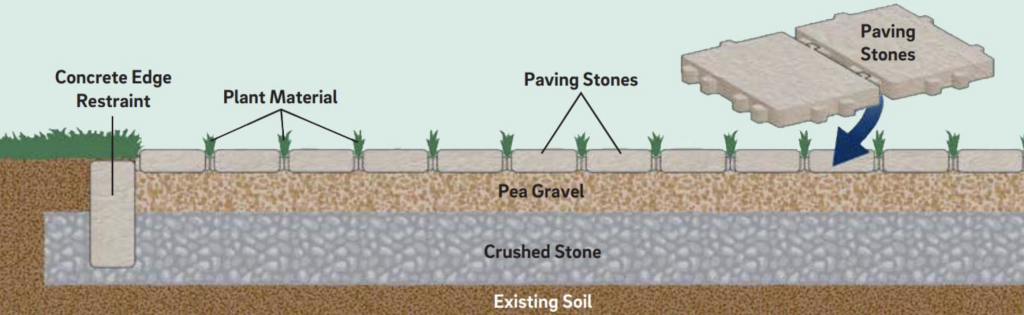 Permeable Paver Design Source: Philadelphia Water Department
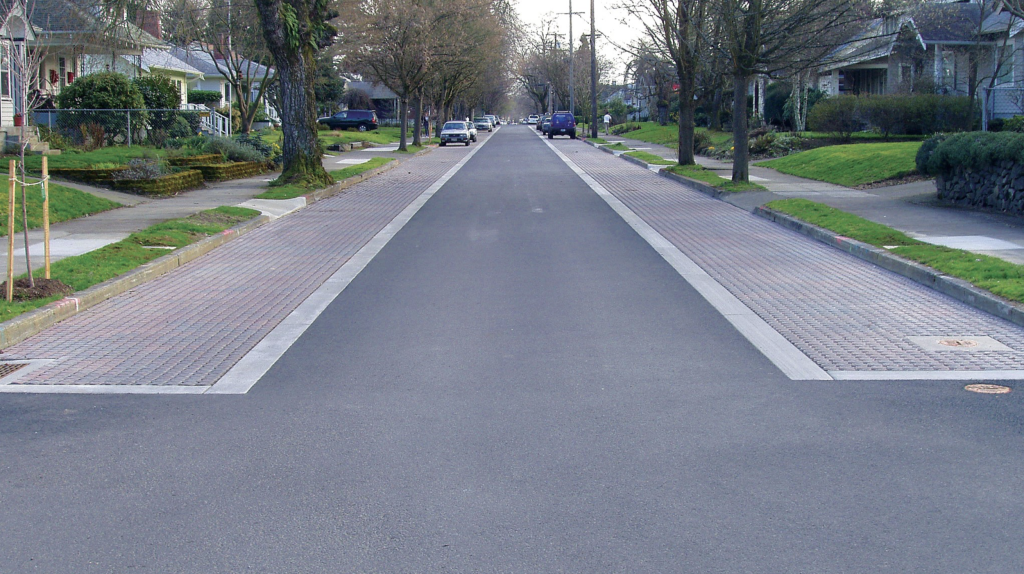 Pavers along a neighborhood street. Source: Mutual Materials
Features of Green Streets
Permeable Pavement: Turning Streets into Sponges
Most streets are covered with asphalt or concrete that prevents rainwater from soaking into the ground. Instead, rain runs across the street into storm drains. Along the way, it can pick up motor oil, heavy metals, trash, and other pollutants, carrying them into local waterways and eventually into the San Francisco Bay.
How it works: Green Streets can replace impermeable pavement with porous asphalt or permeable pavers that allow rainwater to pass through into a layer of gravel beneath. The gravel temporarily stores the water while allowing it to slowly infiltrate into the ground, filtering sediment and pollutants along the way.
The benefits: Permeable pavement reduces surface pooling and the amount of polluted runoff flowing into local waterways, while helping rainwater return naturally to the ground.
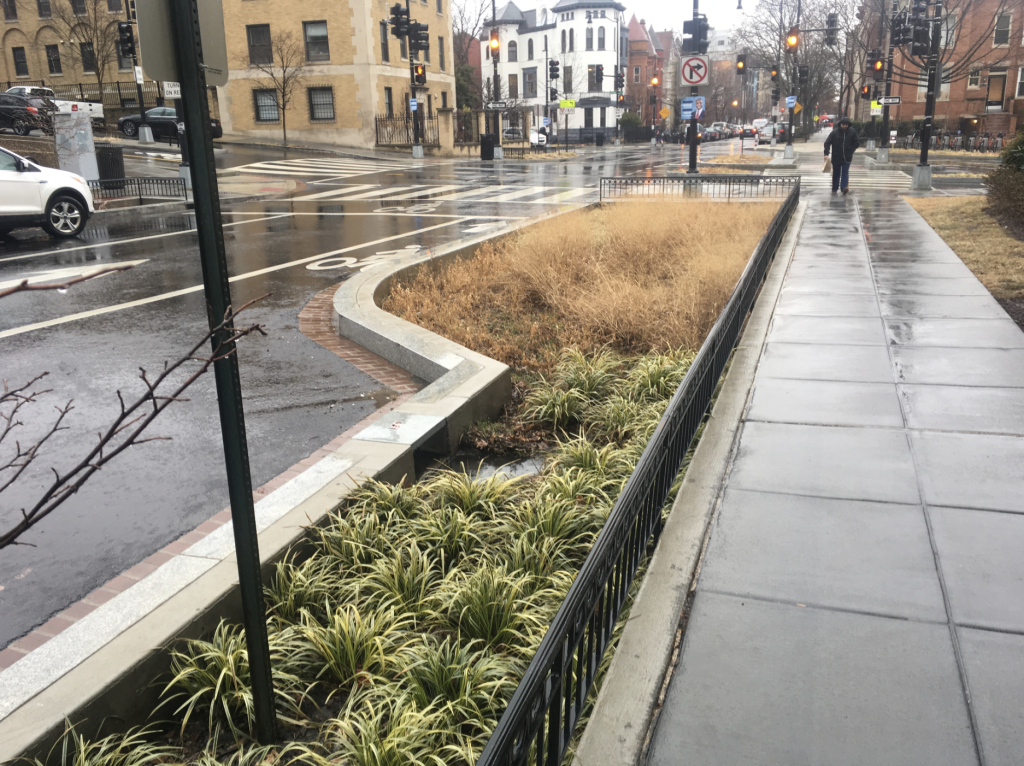 Bioswale Source: Sylvan Gardens Landscaping Blog
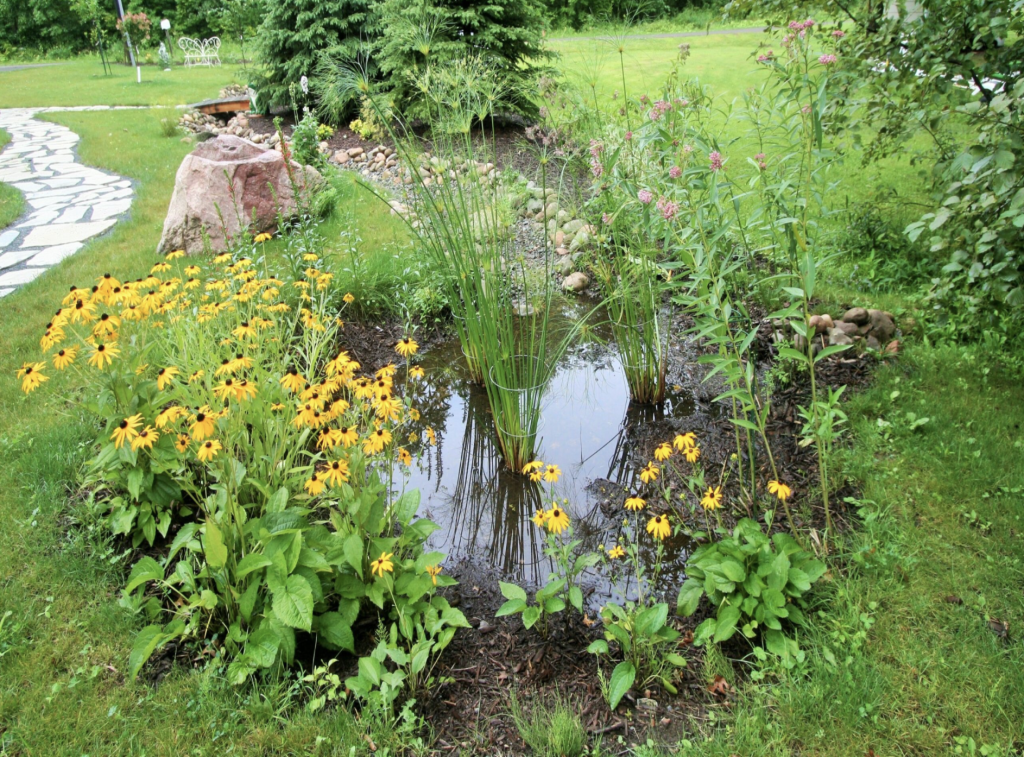 Rain garden Source: Mutual Materials
During heavier storms, permeable pavement may not be able to absorb all of the water from the street. Rain gardens and bioswales provide another way to capture and manage runoff.
How it works: Rain gardens and bioswales are gently sloped downward to collect heavy runoff. Both are usually filled with a balanced bioretention soil mix (~60% concrete sand to maximize water infiltration speed and ~40% organic compost to support plant/microbe life) and filter out contaminants.
The benefits: Much like the open-graded gravel layer used under permeable concrete, the plants and soil placed within the gardens and bioswales absorb the pooling water and filter pollutants.
What’s the difference between rain gardens and bioswales? While both filter stormwater, they work somewhat differently. A rain garden is effectively a mini “pond” that collects water to allow it to soak into the ground. A bioswale is an engineered “creek” that slowly moves water over a larger length. Rain gardens are designed to handle smaller volumes (e.g., runoff from a roof), while bioswales are more complex to construct but can manage the runoff from a much larger area (e.g., runoff from a road).
Together, these features can turn landscaped areas along a street into part of the city's stormwater infrastructure.
Urban Canopy: Cooling Our Streets
On a sunny day, asphalt absorbs the sun's energy and radiates it back into the surrounding environment. This contributes to the urban heat island effect, in which developed areas can become 10-20 degrees warmer than surrounding areas with more vegetation and natural surfaces.
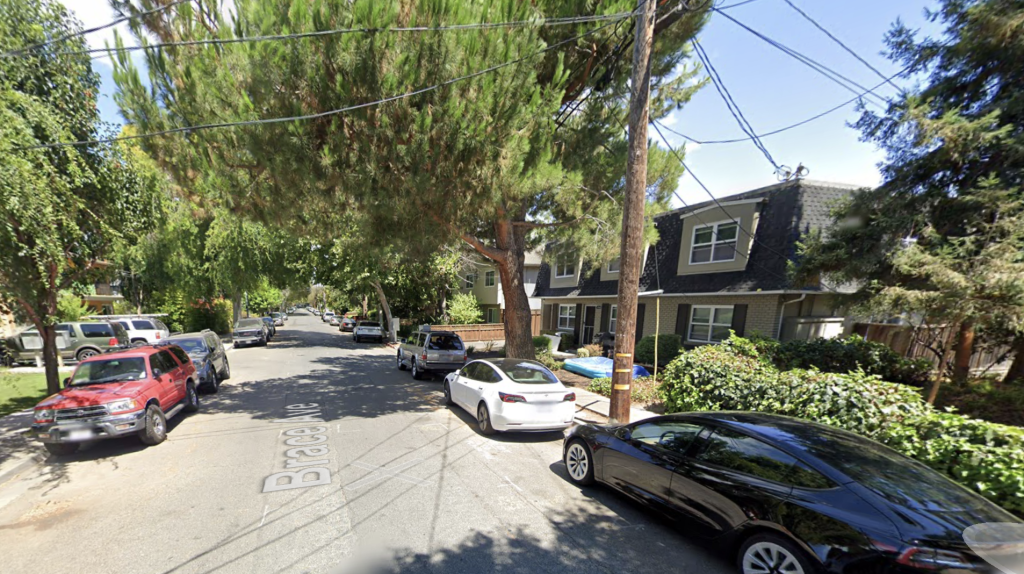 High canopy cover Source: Google Street View, San Jose, CA
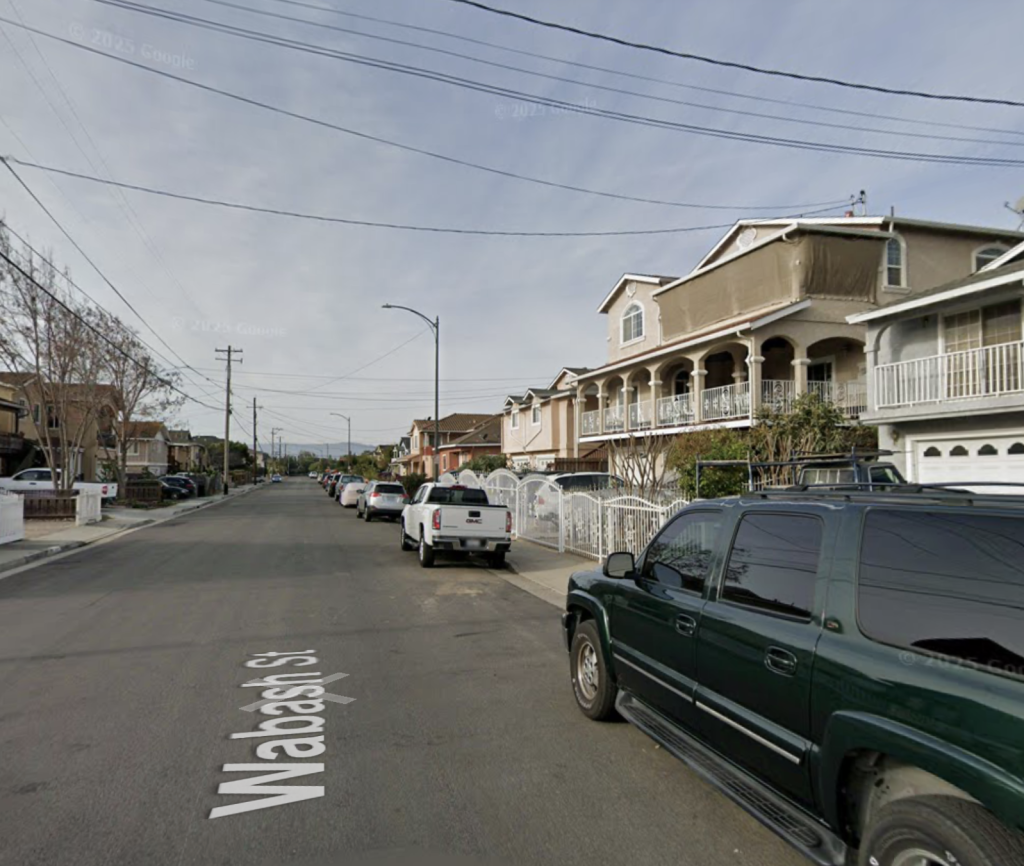 Low canopy cover Source: Google Street View, San Jose, CA
How it works: Green Streets can incorporate mature trees into planting strips, medians, and other areas with sufficient soil to support healthy root growth. Tree canopies provide shade over sidewalks, bike routes and roadways, reducing the amount of heat absorbed by pavement and creating cooler spaces for people.
The benefits: A healthy urban canopy makes streets more comfortable and inviting for pedestrians and cyclists while providing important environmental benefits. Trees can reduce the need for air conditioning, extend the life of pavement by protecting it from intense heat and sunlight, improve air quality, and help manage stormwater. Their shade can also keep rainwater runoff cooler before it reaches creeks and other waterways, helping protect aquatic ecosystems.
Green Streets in Action
Other Bay Area cities have already experimented with these approaches.
San Jose’s Park Avenue Pilot Project
San Jose’s Park Avenue pilot project incorporated rain gardens and permeable pavers at seven intersections, demonstrating that these features can effectively capture and filter stormwater runoff from streets and sidewalks, reducing the pollutants reaching the Guadalupe River, a tributary of the San Francisco Bay. The project also highlighted a challenge for cities: retrofitting existing streets with green infrastructure can be costly.
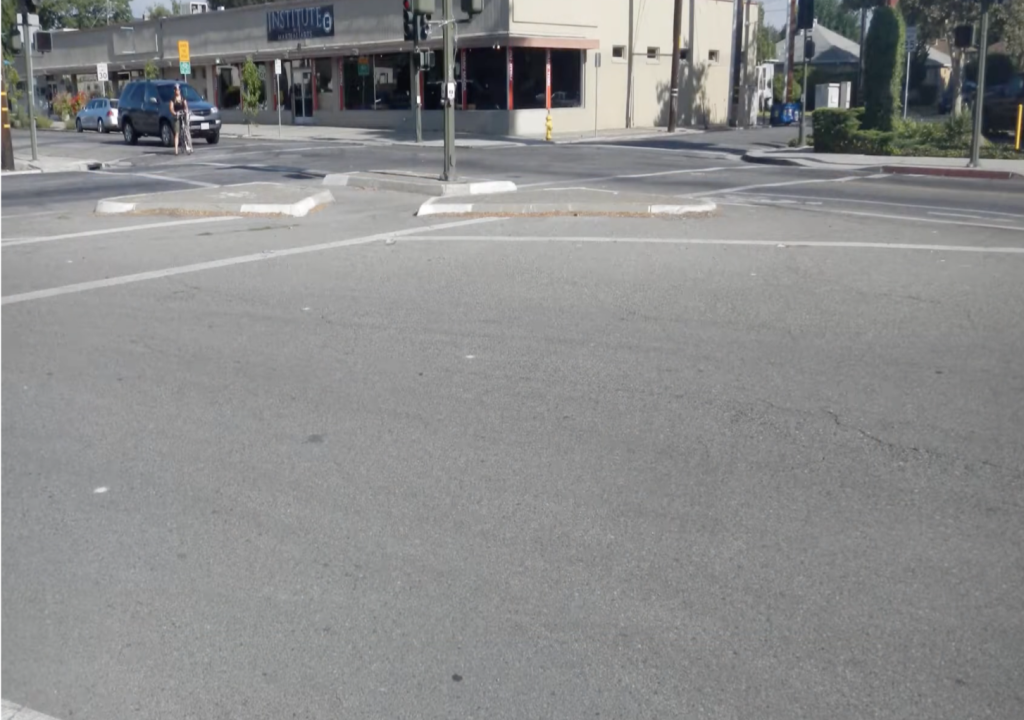 Befpre pilot project Source: sanjoseca.gov
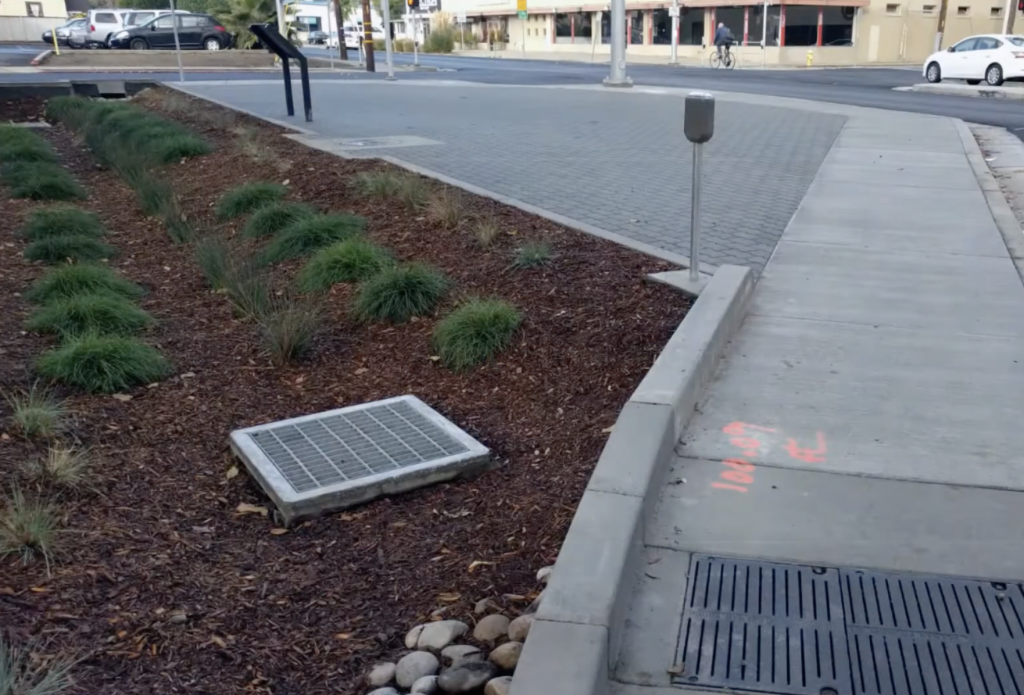 After pilot project Source: sanjoseca.gov
Berkeley’s Allston Way
Berkeley’s Allston Way replaced a large area of asphalt with permeable pavers, successfully reducing stormwater runoff and pollution reaching the bay and exceeding the project’s original projections. The project also highlighted an important consideration for future Green Streets: permeable surfaces require ongoing maintenance to prevent soil, litter, and other debris from clogging the spaces between pavers and reducing their effectiveness.
These examples show both the promise and the practical challenges of Green Streets. They also give Mountain View an opportunity to learn from what other communities have tried.
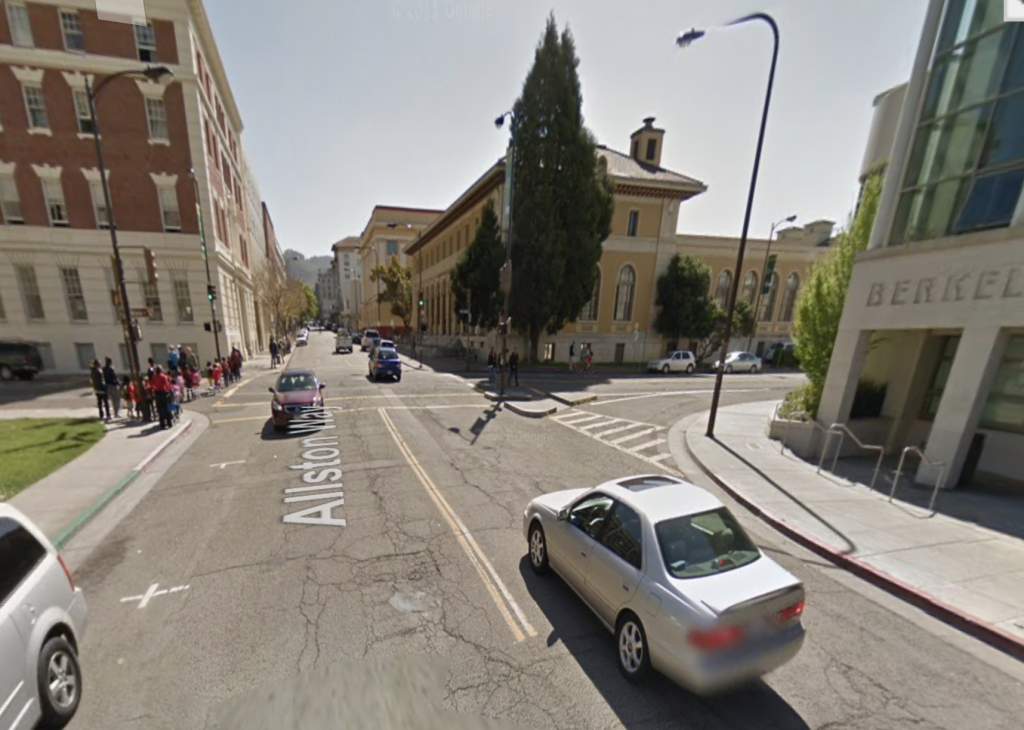 Before repavement. Source: Google Street View
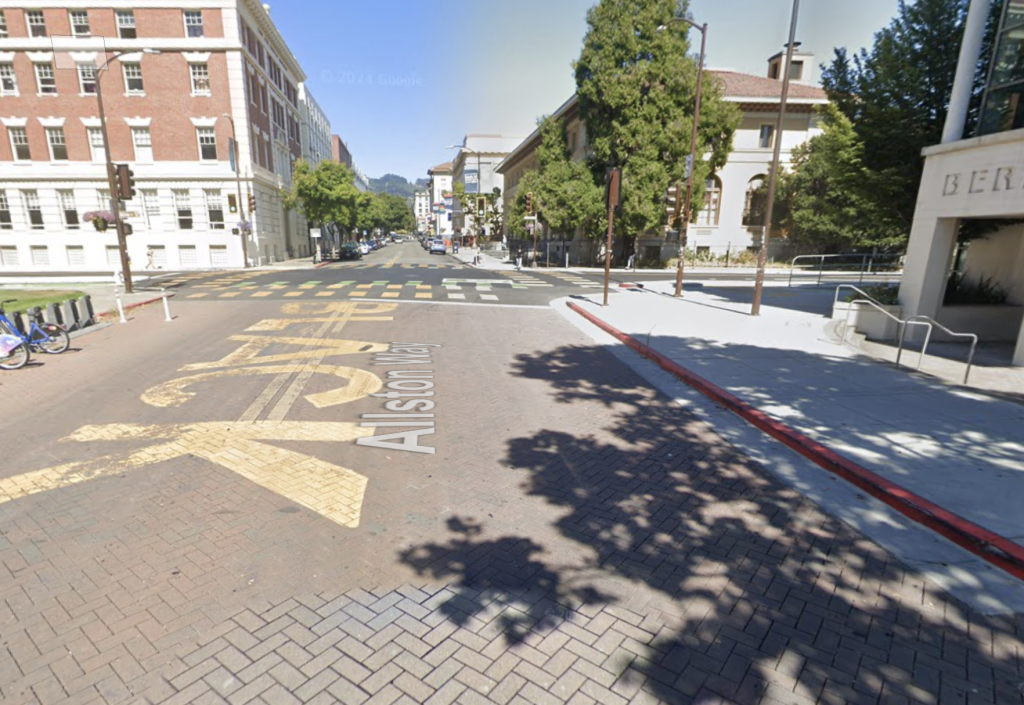 After repavement. Source: Google Street View
Rengstorff Avenue: A Green Street in the making?
Mountain View now has an opportunity to put Green Street ideas into practice on one of its most important corridors.
Today, Rengstorff Avenue is a multi-lane, asphalt-heavy arterial road connecting neighborhoods, parks, businesses, and transit. On hot, sunny days, its broad expanses of pavement absorb and radiate heat into the surrounding neighborhood. During rainstorms, water runs across these impervious surfaces, picking up pollutants before flowing into storm drains and, ultimately, local waterways and the San Francisco Bay.
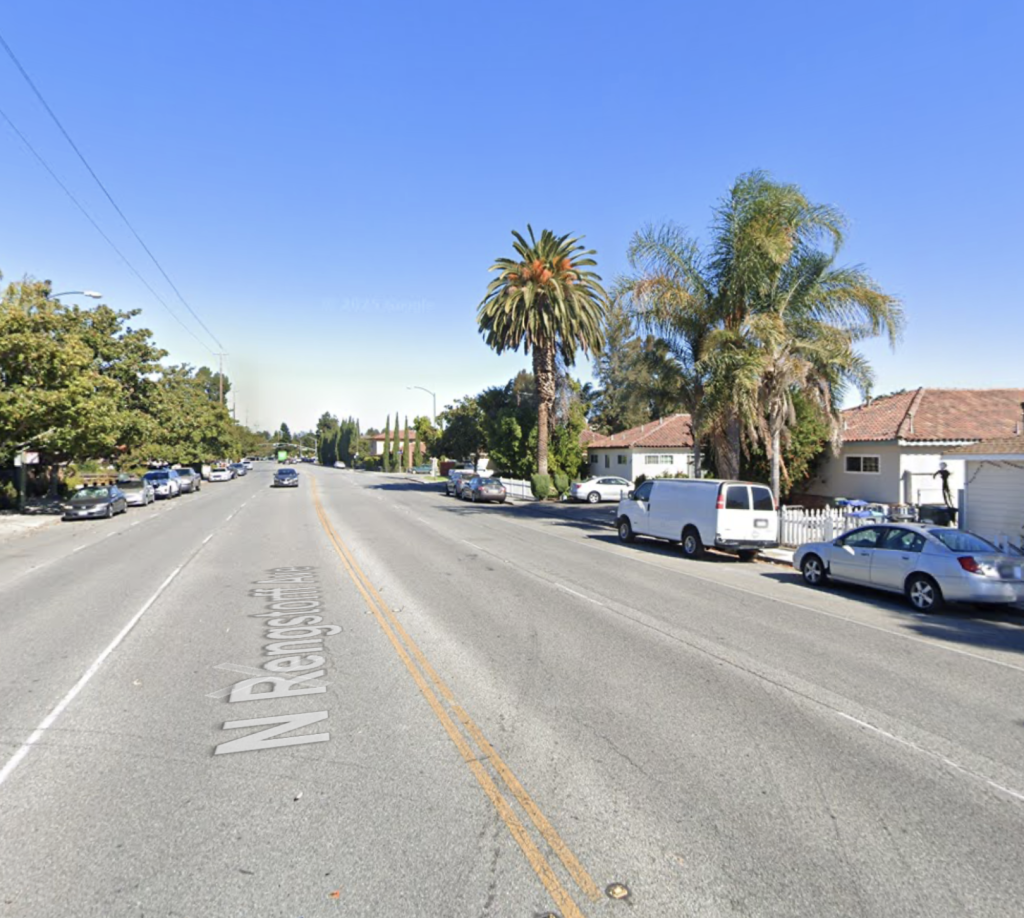 Rengstorff Avenue today. Source: Google Street View
The City's Rengstorff Avenue Complete Streets Study, launched in 2024, is exploring how the corridor between El Camino Real and Leghorn Street could be redesigned to better serve the people and environment around it.
What if Rengstorff could become more than a transportation corridor?
The study is exploring Green Street strategies that could transform the corridor, including:
- Bioretention curb extensions near high-density housing, intersections, and transit stops that would capture and filter stormwater before it reaches storm drains and waterways.
- Vegetated medians replacing existing concrete medians, creating linear bioswales that absorb and filter runoff while adding greenery to the corridor.
- More trees and shade corridors connecting high-density residential areas with parks and commercial destinations. One potential goal is a shaded walking and biking connection between Rengstorff Park and the Middlefield and Rengstorff shopping area.
- Improved walking and biking connections that make it more comfortable for people of all ages and abilities to travel along and across the corridor.
Imagine a Rengstorff Avenue where trees shade the sidewalk and bike route, planted medians capture rainwater, native vegetation supports the surrounding ecosystem, and comfortable paths connect homes with Rengstorff Park, shopping and transit.
That is the promise of a Green Street: a single public space that can move people, support nature, manage stormwater, and make the neighborhood cooler and more inviting—all at the same time.
Let's make every street greener
Rengstorff is an opportunity, but the bigger question is what happens beyond that?
Whenever Mountain View repaves a street, replaces utilities, or redesigns a corridor, we should ask: Can this street do more?
Can we plant more trees? Capture stormwater? Add native plants? Replace some impervious pavement? Improve walking and biking? Connect one green space to another?
Green infrastructure should not be treated as a decorative "nice to have." When streets are already being rebuilt, these opportunities should be part of the City's standard approach to street design.
Our streets are some of the largest pieces of public space in Mountain View. For decades, we have largely asked them to move cars. Green Streets offer a different vision: streets that move people while also providing shade, managing stormwater, supporting biodiversity, protecting our waterways, and connecting our neighborhoods to nature.
Rengstorff Avenue could be one step toward that future. But the ultimate goal should be bigger:
All streets should be Green Streets.
How Can I Stay Informed and Get Involved?
Together, these plans and projects offer an important opportunity for Mountain View residents. You can help shape the future of Green Streets in Mountain View by reviewing and providing input about these initiatives:
Rengstorff Avenue Complete Streets Study: The study is currently underway, with upcoming reviews by the Bicycle/Pedestrian Advisory Committee on August 18, and City Council Transportation Committee on August 31.
Additionally, attend the 5:30 PM community meeting on August 24th at the Mountain View Community Center to give direct feedback to city staff.
To give input online, take the Rengstorff Avenue Complete Streets Survey
Additional Meeting schedules and agendas are available at:
Mountain View City Council and Committee Meeting Calendar
Mountain View Active Transportation Plan: The City is developing an updated Active Transportation Plan that will help guide future street design, including how and where Green Street elements are incorporated into transportation projects. The plan is expected to return to City Council for review this fall, providing another opportunity for community input.
Biodiversity and Urban Forest Plan: Adopted by the City in April, the plan establishes Green Streets as a tool for advancing Mountain View’s broader sustainability and biodiversity goals. It calls for streets to incorporate trees, native plants, habitat connections and stormwater infrastructure that support both people and local ecosystems.
Other Organizations
Other organizations such as Green Spaces Mountain View, the Mountain View Coalition for Sustainable Planning, and the Silicon Valley Bicycle Coalition have been advocating for such infrastructure. To further support green infrastructure, consider getting involved.
https://www.greenspacesmv.org/
https://bikesiliconvalley.org/